OIBIPN
In the recruitment of Taiwanese knowledge seed volunteers, please refer to the project page , WOSTK fan group.
| [ Close ] |
Natural History [ edit ]
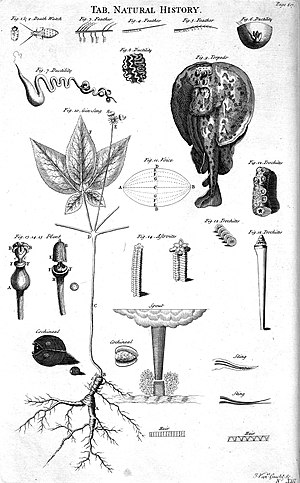
Natural History ( Latin : Historia Naturalis ) also translated the natural history , natural history , human beings on Earth in the evolution of various organisms ( animals , plants , fungi , microorganisms) and their surrounding living environment in a variety of things constantly observed and recorded Compared with the analysis method and the experimental method, it is more inclined to observe themethod. It is the only way for the budding and development of modern science . It contains scientific research but is not limited to this. At present, various natural history articles are mainly published in science popularization magazines and rare in academic journals [1] . In terms of classification, it belongs to the natural sciences and is a systematic study of natural objects or classifications. [2]
This is a concept with a very wide range of meanings and covers many important professional disciplines. In the West, studies of natural history can be traced back to ancient Roman times, and Arab countries can trace back to medieval times. After the work of the European Renaissance natural historians, it has become an interdisciplinary concept that has encompassed many specialized scientific fields. For example, earth biology is a work that combines a variety of professional scientific knowledge and interdisciplinary research. This term is a description of the process of development and improvement of human natural sciences , scientific methods, and historical culture. It will have different understandings in different fields, but it is basically starting from the perspective of naturalism .
table of Contents
[ hide ]- 1Definition
- 1.1History
- 1.2Modern
- 2development process
- 2.1Ancient
- 2.2Medieval
- 2.3Renaissance
- 2.4The birth of biological science
- 3Natural History in China
- 4museums
- 5naturalists
- 6social groups
- 7related works
- 7.1China
- 7.2Other countries
- 8related items
- 9reference sources
- 10external links
Definition [ edit ]
History [ edit ]
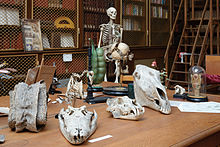
The term "natural history" is derived from the Latin "historia naturalis," and its meaning has become narrower over time . The meaning of the word " nature " has grown. In ancient times, the description range of natural history basically covered all things connected with nature or materials obtained from nature. For example, Old Pliny was published in the Encyclopedia of Natural History about 77-79 BC and included astronomy , geography , humans , technology , medicine , various superstitions, and animals and plants .
In the 19th century, Europeans considered that knowledge had two main parts: the humanities (including theology ) and the study of nature . The study of nature can be divided into the natural history of the observation record, the summary analysis, and the corresponding natural philosophy . In modern times, natural philosophy roughly corresponds to modern physics and chemistry , and natural history includes biological and geological sciences. The two parts are closely related. During the golden period of independent scientists , many people promoted the development of these two fields. The early papers were widely read at the professional scientific conferences organized by the Royal Society of the United Kingdom and the French Academy of Sciences which were founded in the 17th century .
Natural history research has been promoted by various practical uses. For example, under the influence of the industrial revolution , the search for more useful minerals has promoted the development of geology. [3]
From the point of view of development context, the West is through the experience of modern science Natural History (Natural History), natural philosophy (Natural Philosophy), Zirankexue (Natural Science) evolved in three stages.
Modern [ edit ]
The modern definition of natural history comes from different fields and sources, turning into an emphasis on only one aspect, such as what is often regarded as a type of observation and subject of study, knowledge, craft, or practice. Compared with the observed patterns, the focus is more on the observer. [4]
Biologists tend to focus on biological research in their respective fields. Marston Bates thinks: “Natural history is the study of animals and plants... Then I think natural history as a study of different levels of life, how animals and plants The influence of the surrounding environment, how they form a huge group of populations and communities." [5] DS Wilcove and T. Eisner are defined as: "A close look at the origin, evolution, behavior of organisms, between them and other species "Relationships." [6] Some definitions go further and focus on the direct observations of past and present organisms in their living environment. For example, GA Bartholomew thinks: "A natural history student or natural historian should directly observe plants and animals. To learn, because the functions possessed by living organisms are inseparable from the environment in which they live, if they do not know their evolutionary history, they cannot fully explain the structure and function of living things. Natural history learning should include fossils, natural environments, terrain, and other Research." [7]
Many of the definitions of natural history contain description elements, such as the new HW Greene statement: "Natural history is a description of ecology and behavior." [8]
Recently, many people think that natural history should have a broader meaning, such as S. Herman, who defined this area as “natural history is the scientific research of plants and animals in the natural environment. It focuses on individual organisms and ecosystems. The level of organization, and emphasis on identification, life history, distribution area, number of distributions, and relationships, often also includes aesthetic components.” [9] T. Fleischner defines a broader field and “passes in an honest and accurate manner. Practice and focus on feeling the world outside of humans." [10]
These definitions have brought the field of natural history to a higher level. B. Lopez used the Inuit argument to summarize these broad definitions as “Patient interrogation of a landscape.” [11]
The understanding of natural history varies from field to field, but the scope of natural history includes many important natural history museums. It usually includes elements of anthropology, geology, biology, and astronomy, as well as botany and zoology. Discover and explain human cultural knowledge, the natural world, and the universe through scientific research and education. [12] [13] Even includes various cultural and natural components of the world. [14]
Development process [ edit ]
Ancient [ edit ]
Natural history began with the analysis of the diversity of the natural world by Aristotle and other ancient philosophers.
Natural history is the understanding of all the things that the old Pliny could see in this world, including biology, geology, astronomy, technology, art, and humanity. [15]
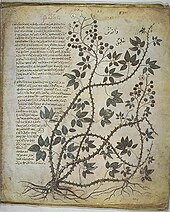
In 50-70 BC, Dioskoris, a Roman physician of Greek origin, wrote Pharmacology. It was circulated for more than 1500 years until it was replaced by the Renaissance, which was the longest spread among all natural history books.
From ancient Greece to the 18th century, through the constant efforts of natural historians such as Carl Linnaeus , natural history ranges from natural levels and chains of life, mineral structures, vegetables, to more primitive forms of animals, and more. The more complex forms of life, which ultimately ended with our species, are increasingly refined and form an important concept of linear tables of biological evolution. [16]
Medieval [ edit ]
Natural history did little progress in medieval Europe. The natural history of ancient Greece and Rome was destroyed in Europe. However, it has been widely circulated in the Arab and Eastern worlds, and has produced tremendous development. Such as Ibn Sina 's "Medical Code." Many natural history books were subsequently translated back into Latin from Arabic.
Since the 13th century, through the work of many pastors, especially Thomas Aquinas , Aristotle's works have been adapted into Christian philosophy, forming the foundation of natural theology .
Renaissance [ edit ]
During the Renaissance, many scholars (especially doctors and anthropologists) began to directly observe the natural history of plants and animals, and collected a large number of exotic specimens and exotic creatures. Leonhart Fuchs is one of the three founders of botany, and the other two are Otto Brunfels and Hieronymus Bock. Other important players in other fields are Valerius Cordus, Konrad Gesner (historical development, Historiae animalium), Frederik Ruysch, and Gaspard Bauhin. [17]
With the rapid increase in the number of known organisms, more attempts have been made to promote the classification and organization of species, and ultimately a complete system has been formed by the Swedish natural historian Carl Linnaeus . [17]
The birth of biological sciences [ edit ]
The major contribution of British natural history is the description of plants, animals, and other aspects by naturalistically inclined pastors such as Gilbert White, William Kirby, John George Wood, and John Ray. Their arguments about natural theology led to the argument that existence exists naturally or because of God's mercy. [18]
At the time of Europe, disciplines such as physiology, botany, zoology, geology and paleontology were formed. The natural history that had previously been studied in science education schools was gradually replaced by scientists with more professional attitudes and became part of “amateur” activities rather than a part of science.
In the Victorian era of Scotland , we think that the study of natural history, people can get a good mental health. [19] In the United Kingdom and the United States, natural history has become the hobby of experts, such as birds, studies of butterflies, shells (moltarology, shellfish), beetles and wildflowers; at the same time, scientists have attempted to define a unified biology. Laws (although only partially correct, were later combined with modern evolutionary theory).
However, the tradition of natural history research continues to play a part in the study of biology, especially the ecosystem (the natural system involves the inorganic components of the biosphere and the Earth's biosphere, and provides research content), animal behavior (science of animal behavior Research), and evolutionary biology (research on long-term relationships and effects between various life forms), finally emerged today's comprehensive organism biology.
業餘愛好者和自然歷史學家在建立世界上最大的自然歷史收藏過程中起到了重要的作用,如倫敦自然歷史博物館,華盛頓國家自然歷史博物館。
19世紀三個互相認識的最偉大的英國博物學家, 亨利·貝茲、查爾斯·達爾文和阿爾弗雷德·華萊士,花了很多年進行自然歷史方面的旅行,收集了成千上萬的標本,其中很多都給科學帶來了新的內容,他們寫下了非常多的關於「遠方世界」的先進知識。包括亞馬遜河流域、加拉帕戈斯群島和馬來群島等等,這些工作都幫助了生物學從描述轉變為基礎的科學理論。
自然歷史在中國[編輯]
在中文中,「Natural History」曾經被翻譯為「博物志」、「博物學」、「自然志」、「自然史」等名詞,尤其是通過「博物」這個已有的文言詞彙,讓清末民初的國人更能接受,為中國教育帶來了多種學科的科學知識,起到了科學啟蒙和普及的作用。
有學者認為中國有很多傳統著作所記述的內容與西方自然歷史著作有很多近似的地方,如西晉時期張華著《博物志》,北魏時期酈道元著《水經注》,賈思勰著《齊民要術》,北宋時期沈括著《夢溪筆談》等,當視為中國自然歷史題材的代表。
由於中國當代教育中自然、環境的相關內容較少,同時教育與實踐有脫節的現象,某種程度上造成了年輕人對自然環境不熟悉,對環境保護的忽視,因此逐漸出現了很多在當代教育中增加自然歷史類題材的呼聲,以期增加對於環境以及生物多樣性的關注。近年出現了復興「博物學」的呼聲,認為「博物」應當成為國人在生活中的基本態度,能夠解決國人在經濟高速發展時期在情感、存在、知識、價值、心靈、思想等領域的問題和疑惑。屬於哲學範圍,在本條目中暫不展開。
博物館[編輯]
舊時又稱為「博覽館」。由十五世紀歐洲貴族陳列私人收藏的珍奇屋演變而來。通過展示各種自然歷史收藏品的來激發人類的好奇心的自然歷史博物館,對專業的生物學科和研究項目的出現起到了重要的作用。特別是在十九世紀,科學家們開始使用他們的自然歷史收藏品來給高年級的學生當教具。
博物學家[編輯]
「博物學家」是一個在西學東漸過程中誕生的中西結合詞彙,在英語中為Naturalist,也可譯為自然歷史學家、自然主義者。
在英文中的含義包括:
- 在自然歷史領域探索實踐的學者專家
- 從事自然保護活動的成員
- 提倡自然主義(哲學)的人
在中文語境中,通常是指在自然歷史和自然科學領域探索實踐的學者專家。
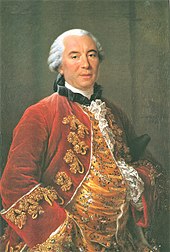
歷史上的著名博物學家有亞里士多德(前384年-前322年3月7日)、布豐(1707~1788)、卡爾·林奈(1707~1778)、居維葉(1769~1832)、拉馬克(1744~1829)、萊爾(1797~1875)、查爾斯·達爾文(1809~1882)、華萊士(1823~1913)、法布爾(1823~1915)等,生物分類學、地質學、比較解剖學、演化生物學、生態學和動物行為學等能有今日的進展都與他們的「博物」分不開,他們的傑出工作徹底改變了人們的自然觀乃至世界觀。盧梭、歌德、梭羅等,均是博物學家。到了20世紀,也有不少出色的博物學家,如勞倫茲(1903~1989)、古爾德(1941~2002)、邁爾(1904~2005)、威爾遜(1929~)等等。
社會團體[編輯]
「自然歷史」這個名詞的前面經常冠以各個國家和地區,獨立地或者與考古學並列出現。各個地區的自然歷史學會記錄著本地區的鳥類、哺乳動物、昆蟲、真菌和植物,他們也會進行微觀觀察,對地質和地理環境進行監測記錄。
在英國,就有成立於1829的自然歷史學會,倫敦自然歷史學會(1858),伯明罕自然歷史學會(1859),英國的昆蟲和自然歷史學會成立於1872。
自然歷史學會的增長,也刺激了在熱帶地區的英國殖民地發現了很多新的品種。有很多英國官員在新的殖民地發現了新的物種,並將標本送回博物館。
相關著作[編輯]
中國[編輯]
- 先秦:《山海經》、《詩經》、《爾雅》
- 西晉:張華著《博物志》
- 北魏:酈道元著《水經注》,賈思勰著《齊民要術》
- 唐朝:玄奘著《大唐西域記》
- 北宋:沈括著《夢溪筆談》
- 明代:李時珍著《本草綱目》,根據徐霞客的筆記整理的《徐霞客遊記》
其它國家[編輯]
- 古埃及;《埃伯斯紙草書》
- 古希臘;狄奧弗拉斯圖著《植物史》、《植物原理》
- 古羅馬;老普林尼著《博物志》(又譯《自然史》),狄奧斯科里迪斯著《藥理》
- 印度:《遮羅伽集》、《妙聞集》
- 阿拉伯:阿爾-賈希斯著《動物之書》,伊本·西那著《醫典》
- 義大利:馬可·波羅述《馬可·波羅遊記》
- 摩洛哥:伊本·白圖泰述《伊本·白圖泰遊記》
- 瑞士:格斯納著《動物志》
- 法國:布豐著《自然史》(又譯《博物學》),達朗貝爾和狄德羅支持編著的《百科全書》,法布爾著《昆蟲記》
- 英國:懷特著《塞爾彭自然史》,達爾文著《物種起源》,華萊士著《馬來群島自然考察記》
- 德國:洪堡著《宇宙》、《旅行記》
- 美國:梭羅著《瓦爾登湖》
相關條目[編輯]

參考來源[編輯]
- ^ Natural History WordNet Search, princeton.edu.
- ^ Brown, Lesley, The New shorter Oxford English dictionary on historical principles, Oxford [Eng.]: Clarendon, 1993, ISBN 0-19-861271-0
- ^ Barry Barnes and Steven Shapin, "Natural order: historical studies of scientific culture", Sage, 1979.
- ^ Thomas Lowe Fleischner, The Way of Natural History, Trinity University Press, 2011.
- ^ Marston Bates, The nature of natural history, Scribners, 1954.
- ^ D. S Wilcove and T. Eisner, "The impending extinction of natural history," Chronicle of Higher Education 15 (2000): B24
- ^ G. A. Bartholomew, "The Role of Natural History in Contemporary Biology", Bioscience 36 (1986): 324-329
- ^ H.W. Greene, "Organisms in nature as a central focus for biology", Trends in Ecology & Evolution 20 (2005):23-27
- ^ S. G Herman, "Wildlife biology and natural history: time for a reunion", The Journal of wildlife management 66, no. 4 (2002): 933–946
- ^ T. L. Fleischner, "Natural history and the spiral of offering", Wild Earth 11, no. 3/4 (2002): 10–13
- ^ Barry Lopez, Arctic Dreams, Vintage, 1986.
- ^ American Museum of Natural History, [1]
- ^ Field Museum, [2]
- ^ The Natural History Museum, Mission Statement
- ^ Pliny the Elder. Natural History: A Selection. Penguin Classics. 2004. ISBN 978-0-14-044413-1.
- ^ Arthur O. Lovejoy, The Great Chain of Being: A Study of the History of an Idea, Cambridge, Massachusetts: Harvard University Press, 1964 [1936], ISBN 0-674-36153-9
- ^ 17.0 17.1 "Natural History Timeline". HistoryofScience.com.
- ^ Patrick Armstrong. The English Parson-naturalist: A Companionship Between Science and Religion. Gracewing Publishing. 2000 [31 March 2013]. ISBN 978-0-85244-516-7.
- ^ Diarmid A. Finnegan, 'An aid to mental health': natural history, alienists and therapeutics in Victorian Scotland, Studies in History and Philosophy of Biological and Biomedical Sciences, 2008, 39 (3): 326–337, PMID 18761284, doi:10.1016/j.shpsc.2008.06.006
外部連結[編輯]
 | 維基共享資源中相關的多媒體資源:自然歷史 |
| |||
| ||
|
6 categories :
- Natural history
- Natural philosophy
- Naturalist
- History of science
- Earth Science History
- Biology history


